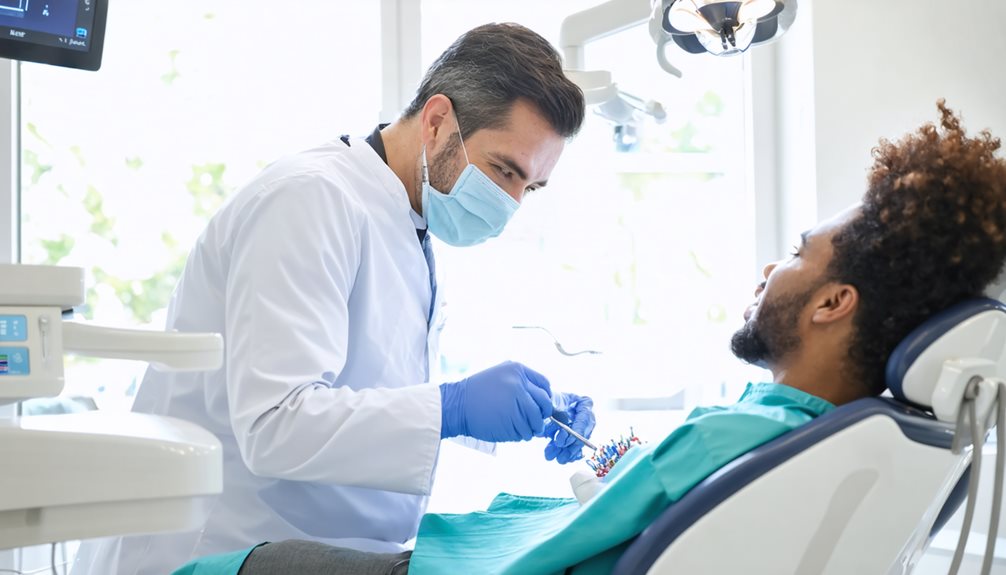
Choosing the right prosthodontist can feel overwhelming, but focusing on key factors can simplify your decision. Start by examining their qualifications—credentials, licenses, and certifications are vital. Don’t overlook their experience and specialization in specific procedures like implants or aesthetic restorations. Patient reviews can provide valuable insights into their treatment approach and communication skills. Also, the office environment and use of modern technology can greatly impact your experience. But there’s more to take into account, such as appointment availability and insurance compatibility. Ready to uncover the essential strategies for making an informed choice? Let’s explore further.
Evaluate Qualifications and Credentials
When choosing a prosthodontist, it is crucial to thoroughly evaluate their qualifications and credentials. Start by conducting a detailed credential verification process to confirm the prosthodontist’s legitimacy. Confirm that they hold a valid license to practice in your state, which is a fundamental requirement. This step not only establishes their professional credibility but also guarantees they adhere to the state’s regulatory standards. Additionally, investigate their certification with the American Board of Prosthodontics or equivalent authority, as this reflects their commitment to maintaining high standards of practice.
Next, explore their education background. A qualified prosthodontist should have completed an accredited dental program followed by advanced training in prosthodontics. Examine the institutions they attended and verify the authenticity of their degrees. This training equips them with the necessary skills to address complex dental issues effectively.
Furthermore, verify if they participate in continuing education programs. This indicates their dedication to staying updated with the latest advancements in prosthodontics, ensuring they provide modern, evidence-based care. By systematically evaluating these factors, you gain control over selecting a prosthodontist who meets your high standards and can confidently address your dental needs.
Assess Experience and Specializations
Evaluating a prosthodontist’s experience and specializations is an essential step in selecting the right professional for your dental care. You should start by inquiring about the prosthodontist’s clinical expertise in various dental procedures. It’s vital to determine how long they’ve been practicing and whether they have focused on areas that align with your specific needs, such as implants, dentures, or maxillofacial prosthetics. A seasoned prosthodontist with a track record in advanced treatment techniques can provide you with the confidence that your care is in capable hands.
Next, explore their specializations. Prosthodontists often have particular areas of focus, and understanding these can help you make an informed choice. Some may excel in aesthetic restorations, while others might specialize in complex reconstructive procedures.
Consider Patient Reviews and Testimonials
Delving into patient reviews and testimonials can offer invaluable insights when choosing a prosthodontist. These firsthand accounts reveal critical aspects such as patient satisfaction and treatment outcomes, providing a clearer picture of what you can expect. Start by searching online platforms dedicated to healthcare reviews. Look for consistent patterns in feedback—both positive and negative—as they can highlight the prosthodontist’s strengths and areas for improvement.
Focus on reviews that detail the specific treatments you’re considering. This will help you evaluate how well the prosthodontist manages cases similar to yours. Pay attention to comments on the durability and aesthetics of the dental work, as these directly relate to treatment outcomes. A high level of patient satisfaction often correlates with a prosthodontist’s ability to deliver personalized care and effective solutions.
Additionally, testimonials from previous patients can provide insights into the practitioner’s communication skills and professionalism. A prosthodontist who listens attentively and explains procedures clearly can greatly enhance your treatment experience. By systematically analyzing patient reviews, you gain an extensive understanding of the prosthodontist’s capabilities, allowing you to make a well-informed decision that aligns with your expectations and needs.
Frequently Asked Questions
How Do Prosthodontists Handle Dental Emergencies?
When facing dental emergencies, prosthodontists implement emergency protocols to guarantee swift response. They conduct a thorough patient assessment, identifying issues and determining immediate treatment. Your situation is stabilized quickly, maintaining control and restoring oral function efficiently.
What Payment Plans or Insurance Options Do Prosthodontists Offer?
You’ll find prosthodontists offer various payment options, including installment plans. They accept diverse insurance coverage, allowing you to manage costs effectively. Always verify your insurance compatibility directly with the office to guarantee seamless financial arrangements.
What Is the Typical Duration of Prosthodontic Treatments?
You’ll find prosthodontic treatment timelines vary based on procedure complexity. Simple procedures might take a few weeks, while complex ones could span several months. Understanding these factors helps you manage expectations and plan accordingly for best results.
Are Prosthodontists Equipped With the Latest Dental Technology?
Yes, prosthodontists are equipped with the latest dental technology. They use advanced equipment to guarantee precise restorations, enhancing treatment outcomes. Stay informed; ask about their tools to verify your prosthodontist meets modern standards for your dental needs.
How Does a Prosthodontist Ensure Patient Comfort During Procedures?
You control patient anxiety by discussing sedation options with your prosthodontist. They guarantee comfort by tailoring solutions like nitrous oxide or oral sedatives, making certain you’re at ease during procedures. Your comfort and care are their priority.