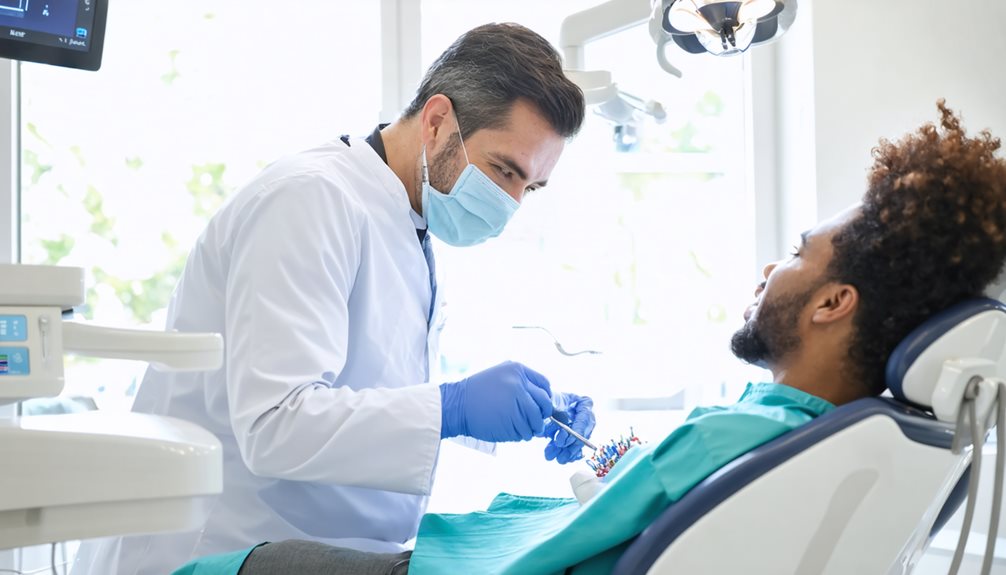
When you’re maneuvering the recovery journey after oral cancer, finding the right prosthodontist is vital. You might wonder what essential tips these specialists offer to aid your healing and guarantee long-term oral health. From selecting a skilled professional to maintaining an effective oral care routine, each step can greatly impact your recovery. But what specific strategies should you implement to support your healing process and enhance your quality of life? Knowing these can make all the difference. Let’s explore how expert advice can transform your recovery experience and what you should prioritize next.
Choosing the Right Prosthodontist
When starting on your oral cancer recovery journey, selecting the right prosthodontist is essential for best rehabilitation. You need a specialist with robust prosthodontist qualifications—a blend of advanced education, clinical training, and board certification. Seek out a prosthodontist who has completed a program accredited by the American Dental Association, ensuring they possess the expertise necessary to address complex oral health issues effectively.
Patient testimonials are invaluable in evaluating the suitability of a prosthodontist. These firsthand accounts offer insights into the practitioner’s approach to care, effectiveness in treatment, and overall patient satisfaction. Look for reviews that mention personalized treatment plans, attentive communication, and successful outcomes. A prosthodontist who consistently receives positive feedback likely prioritizes patient-centered care and adapts treatments to individual needs, enhancing your sense of control and involvement in the recovery process.
Consider scheduling an initial consultation to assess the prosthodontist’s communication style and willingness to address your concerns. This interaction can provide a clearer understanding of how they align with your expectations for recovery. By thoroughly vetting prosthodontist qualifications and valuing patient testimonials, you’ll take proactive steps toward a successful oral cancer recovery.
Essential Prosthodontic Procedures
Steering your oral cancer recovery demands a solid understanding of essential prosthodontic procedures. These procedures play a pivotal role in restoring function and aesthetics post-treatment. Dental implants are at the forefront of oral rehabilitation, offering a stable and durable solution to replace lost teeth. They integrate with your jawbone, helping maintain bone density and offering a natural-looking solution that enhances both function and appearance.
You might also consider removable prostheses, which provide flexibility if your oral health status changes. They’re customizable and can be adjusted as your recovery progresses. Your prosthodontist will guide you in choosing the appropriate option, ensuring it aligns with your recovery goals and lifestyle.
Maxillofacial prosthetics might be necessary if your treatment involved extensive resection. These specialized devices aid in restoring facial contours and oral functions, vital for maintaining quality of life. Throughout this journey, your prosthodontist will employ advanced techniques to tailor these procedures to your unique needs, optimizing your oral rehabilitation.
Post-Recovery Oral Care
As you advance through your oral cancer recovery, attention to post-recovery oral care becomes essential in preserving the benefits achieved through prosthodontic procedures.
Nutritional support plays a significant role in your healing process and ongoing oral health. Incorporate a balanced diet rich in vitamins and minerals to bolster tissue repair and immune function. Foods high in antioxidants, like fruits and vegetables, combat inflammation and enhance recovery. Adequate hydration is equally important, aiding in saliva production and maintaining oral moisture, which is necessary for natural cleansing.
Empower yourself by adhering to these practices, gaining control over your post-recovery journey. Engage with your prosthodontist to tailor an oral care regimen that aligns with your specific needs, guaranteeing sustained rehabilitation success and superior quality of life. Your proactive involvement is key to a resilient recovery.
Frequently Asked Questions
How Long Does Oral Cancer Recovery Typically Take?
Your oral cancer recovery timeline varies, typically spanning weeks to months. You’ll navigate several healing stages, including initial healing, rehabilitation, and long-term restoration. Each stage requires patience and adherence to your prosthodontist’s guidance for best outcomes.
What Dietary Changes Are Recommended During Oral Cancer Recovery?
During oral cancer recovery, prioritize nutrient-rich foods to support tissue repair and immune function. Guarantee adequate hydration to maintain mucosal health. Opt for soft, easily digestible foods to reduce oral discomfort and promote healing. Empower yourself with informed dietary choices.
Can Oral Cancer Affect Speech and How Can It Be Improved?
Oral cancer can impact speech. You can enhance communication by engaging in speech therapy and using communication aids. These methods focus on regaining control over articulation and expression, fostering improved verbal interaction and boosting confidence during recovery.
Are There Any Specific Exercises to Help With Oral Cancer Recovery?
To enhance oral health and jaw mobility post-oral cancer, practice gentle stretching and resistance exercises. Focus on tongue and jaw movements. Consistent daily practice boosts recovery. Always consult your prosthodontist or therapist to tailor exercises effectively.
How Does Oral Cancer Treatment Impact Dental Implants?
Oral cancer treatment can affect dental implant success by altering bone density and oral tissue health. To maintain oral health, guarantee regular check-ups, follow hygienic practices, and consult your dentist about personalized care plans for long-term implant success.